
saam

Around eight million people in Germany suffer from emotional loneliness in old age. saam helps these people to alleviate their feelings of loneliness.
A project by Victoria Bremer, Lynn Dunkel, Marina Hardt-Mitidieri and Phuong "Kitty" Quach
Second semester, 2020
Supervised by Prof. Andrea Krajewski, Garrit Schaap and Dieter Stasch
The problem
Loneliness in old age is not only a current issue, affecting an estimated eight million people at present, but – due to demographic change – is also set to become an increasingly relevant problem in Germany in the future. Social neglect and associated conditions, such as depression, are consequences of emotional loneliness. saam has set itself the task of tackling and alleviating this problem by offering people suffering from loneliness a social space and giving them the opportunity to establish and maintain social contacts despite physical distance, and to build a lasting social network and support system.
The concept
saam is a social space that integrates into users’ everyday lives and is accessible at their dining table. For people who do not live alone, the dining table is already a space for social interaction and getting together. People who are lonely, on the other hand, eat alone and therefore do not have the opportunity to engage in this kind of social interaction. saam re-establishes the dining table as a place of gathering, where users can establish contacts with people who share similar interests.
How to use it
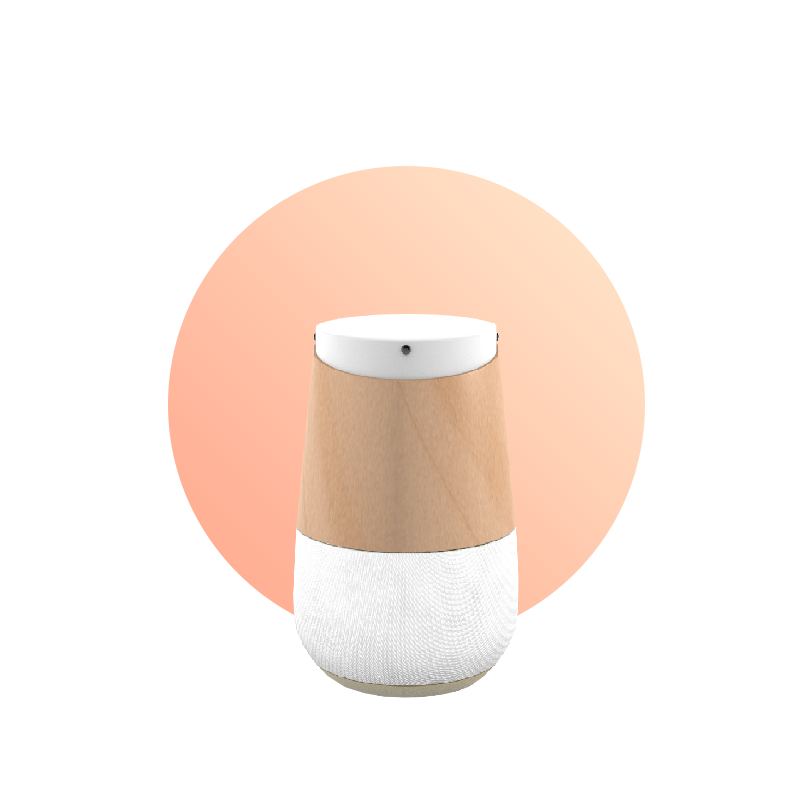
At the heart of saam is the moderation element, which is placed on the users’ dining table. The moderation element creates an interactive user interface by projecting onto the dining table. It also provides users with audio guidance on how to use saam. The projected user interface can be operated using plates.
If users would like some company whilst eating, they can simply set an extra empty plate. saam recognises this request and allows them to either get to know new contacts or invite an existing friend via the user interface. If the user is not yet familiar with saam, they are guided through the interaction by audio instructions.
You can invite people using the extra, empty plate provided. Users can now invite two different types of contacts. Either they use the empty plate to select an existing contact from their circle of friends, or they use the plate to select the ‘Plus’ icon at the edge of their circle of friends. The ‘Plus’ icon allows them to get to know new contacts.
If the user decides to get to know a new contact by selecting the ‘Plus’ icon, saam searches for a suitable person who would also like some company at mealtimes. When searching for a suitable person, saam takes into account factors such as age, shared interests or leisure activities. Users can provide this personal information on a voluntary basis during the ordering process. Once a suitable person has been found, a connection is established and the invited person now has their own place at the dining table in the form of the plate.
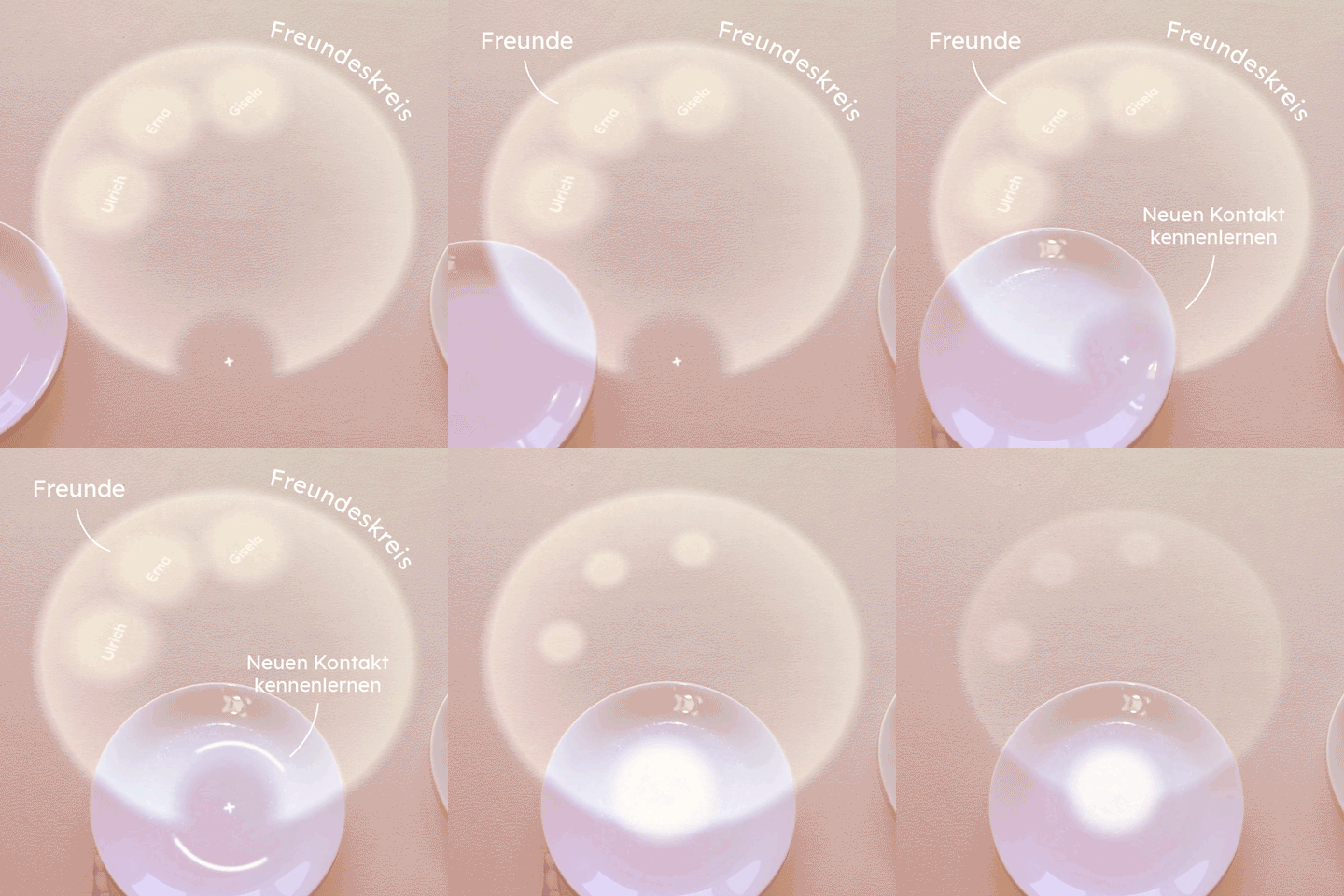

The plate is now also labelled with the relevant name. Whilst enjoying their meal together, the two users can now chat about their shared interests, for example.
Ideally, the two will get on so well that they’ll want to stay in touch. If that’s the case, saam offers the option of adding the contacts to your personal circle of friends. To do this, simply drag the plate, along with the contacts, into your circle of friends. From within the circle of friends, the contacts can easily be invited to the next meal. In this way, the user can build up a social network over time. At the same time, saam enables users to integrate regular social interactions with other people into their everyday lives and thus nurture their newly formed contacts. However, the social space created in this way is merely the starting point for further social interactions, which users can arrange with the help of saam.